Yongde Lao Cha Tou — Aged Ripe Pu-erh Tea, 2012
- per sapere le spese di consegna
Peso del prodotto
50 g
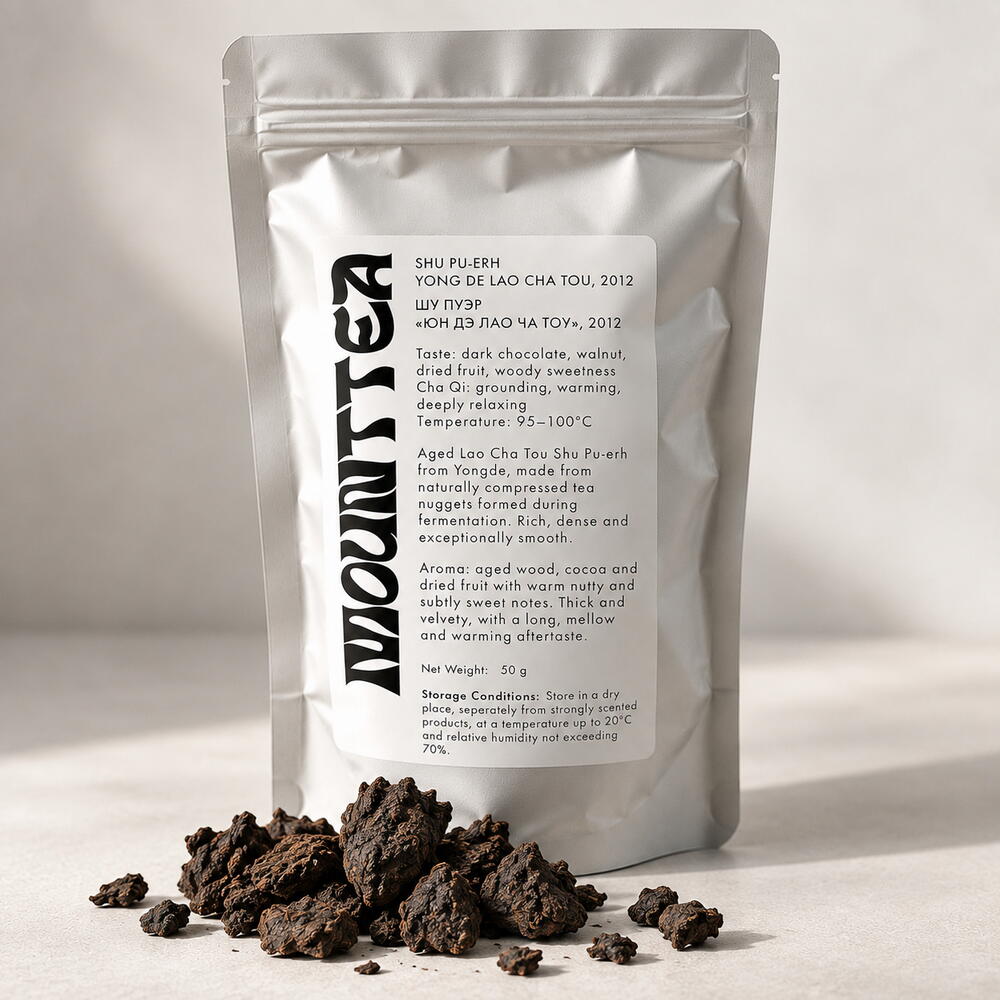
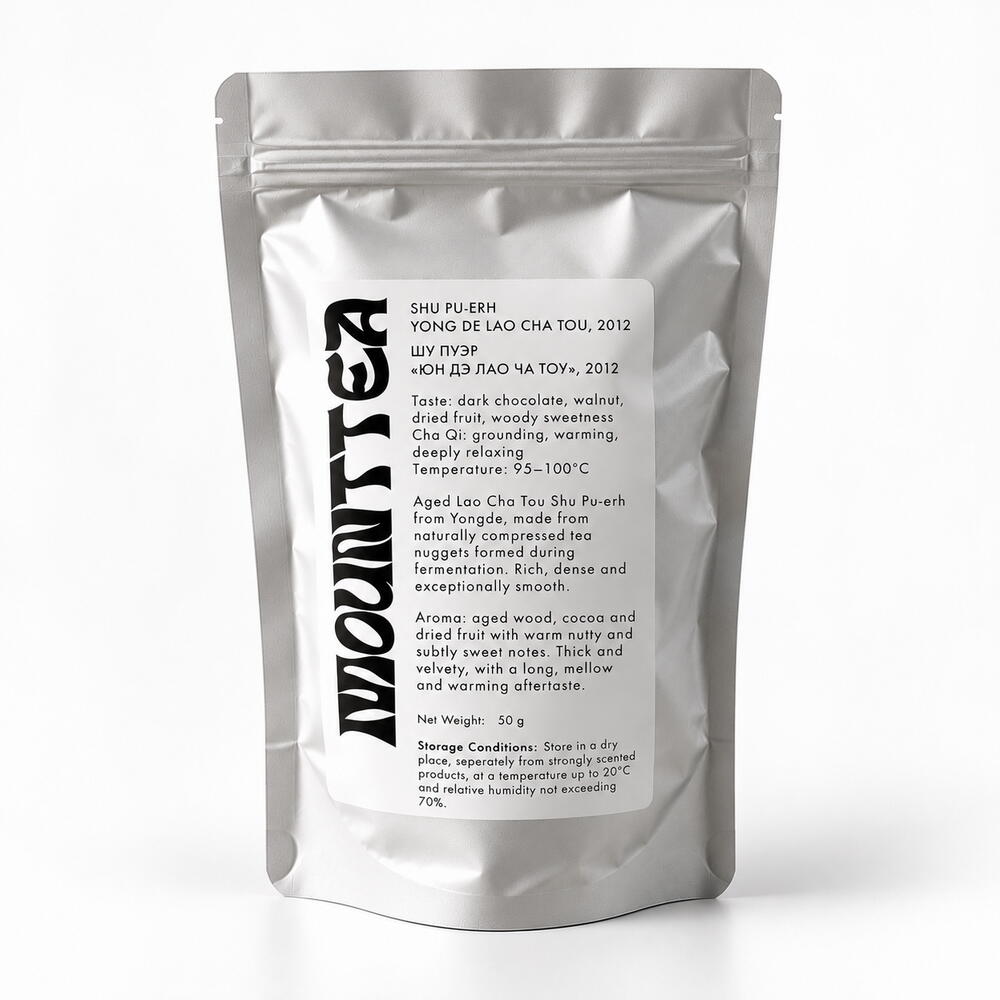
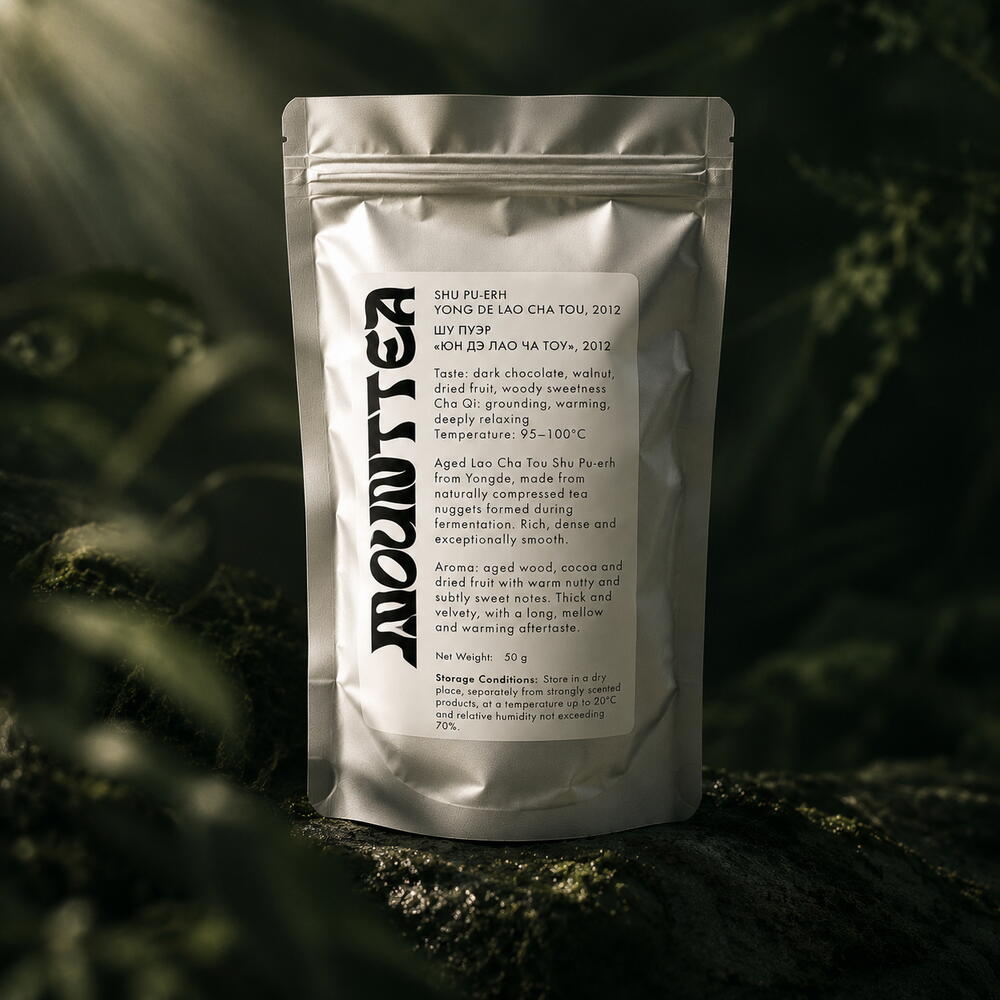
Aged “Old Tea Heads” from Yongde, Lincang Yongde Lao Cha Tou (老茶头) is an aged Ripe Pu-erh (Shu Pu-erh) produced in 2012 from spring-harvested tea material in Yongde County, Lincang, Yunnan — a region renowned for its long tradition of Pu-erh production. Lao Cha Tou, often translated as “Old Tea Heads,” is a distinctive form of Shu Pu-erh consisting of naturally compressed clusters of tea leaves and buds formed during the pile-fermentation process. Dense and slow to open, these clusters can produce remarkably long-lasting tea sessions and a character that differs noticeably from conventional loose or compressed Shu Pu-erh. More than a decade of maturation has given this 2012 Yongde Lao Cha Tou additional softness, depth, and complexity while preserving the calm, woody-nutty character of the original tea. What Is Lao Cha Tou? During the fermentation of Shu Pu-erh, some leaves naturally bind together under the combined influence of heat, moisture, pressure, and the natural compounds released by the tea leaves. These dense clusters are known as Cha Tou (茶头), or “Tea Heads.” Because they are more tightly structured than ordinary loose-leaf Shu Pu-erh, they open gradually during brewing and often require noticeably longer infusion times. This also makes good Lao Cha Tou exceptionally durable across repeated infusions. The 2012 Yongde Lao Cha Tou consists of relatively large, moderately dense clusters of leaves and buds that gradually unfold throughout a long tea session. Appearance and tasting notes he dry tea consists of relatively large, naturally compact clusters of fermented leaves and buds. Its aroma is calm and restrained rather than aggressive, opening with fresh bread and aged wood, followed by subtle nuances of nuts and camphor. The brewed liquor develops a beautiful, rich chestnut-red color. The aromatic profile is mature, soft, and remarkably composed. Woody and nutty notes form the foundation, accompanied by a gentle touch of camphor and nuances of warm spices, bread, and autumn leaves. The fragrance is warm, delicate, and slightly sweet, with a pleasant nutty character. The liquor itself is juicy, clean, and full-bodied, without noticeable bitterness or astringency. A natural sweetness is balanced by a subtle refreshing acidity. The finish is soft, silky, and pleasantly persistent, leaving gentle spicy nuances on the palate. Character and Experience Yongde Lao Cha Tou 2012 is an excellent everyday Shu Pu-erh for those who prefer soft, restrained, and balanced teas rather than extremely heavy or intensely fermented styles. It develops slowly and gradually throughout the tea session. Because of the dense structure of Lao Cha Tou, this tea benefits from longer infusions than conventional Shu Pu-erh. Give the clusters enough time to open and the liquor becomes progressively deeper and richer. It can be brewed lighter for a calm, smooth cup or pushed with longer infusion times for greater concentration and body. Its exceptional durability also makes it particularly suitable for boiling over fire, where the dense tea clusters can gradually release their remaining flavor. Yongde Lao Cha Tou works equally well in the morning, afternoon, or evening. Its character is warming and gently energizing without being excessively stimulating, making it a comfortable tea for long and relaxed sessions. How to brew Gongfu Style • Porous clay teapot suitable for Shu Pu-erh or thick-walled porcelain teaware • Water temperature: 95–98°C (203–208°F) • Tea-to-water ratio: 4–6 g per 100 ml • Rinse the tea briefly with hot water before the first infusion • Because Lao Cha Tou clusters are dense, use longer infusions of approximately 40–60 seconds • Gradually increase the steeping time as the session progresses • Enjoy approximately 9–10 infusions • Allow the clusters enough time to open — this tea generally benefits from longer extraction than conventional loose-leaf Shu Pu-erh. Boiling Yongde Lao Cha Tou is particularly well suited to boiling. After several Gongfu infusions, the remaining tea clusters can be transferred to a kettle with fresh water and gently boiled to extract their deeper sweetness, woody character, and remaining aromatic compounds. Origin Origin • Tea: Yongde Lao Cha Tou (永德老茶头) • English Name: Yongde Old Tea Heads • Type: Aged Ripe Pu-erh Tea (Shu Pu-erh) • Style: Lao Cha Tou • Origin: Yongde County, Lincang, Yunnan Province, China • Year: 2012 • Raw Material: Spring-harvested tea leaves and buds • Form: Naturally compressed tea clusters • Liquor: Rich Chestnut Red • Profile: Aged Wood • Nuts • Bread • Camphor • Spices • Autumn Leaves • Taste: Smooth • Sweet • Full-Bodied • Clean • Silky • Character: Mature • Calm • Warming • Long-Lasting • Processing: Naturally formed Lao Cha Tou clusters from Ripe Pu-erh pile fermentation, followed by long-term maturation
Aged “Old Tea Heads” from Yongde, Lincang Yongde Lao Cha Tou (老茶头) is an aged Ripe Pu-erh (Shu Pu-erh) produced in 2012 from spring-harvested tea material in Yongde County, Lincang, Yunnan — a region renowned for its long tradition of Pu-erh production. Lao Cha Tou, often translated as “Old Tea Heads,” is a distinctive form of Shu Pu-erh consisting of naturally compressed clusters of tea leaves and buds formed during the pile-fermentation process. Dense and slow to open, these clusters can produce remarkably long-lasting tea sessions and a character that differs noticeably from conventional loose or compressed Shu Pu-erh. More than a decade of maturation has given this 2012 Yongde Lao Cha Tou additional softness, depth, and complexity while preserving the calm, woody-nutty character of the original tea. What Is Lao Cha Tou? During the fermentation of Shu Pu-erh, some leaves naturally bind together under the combined influence of heat, moisture, pressure, and the natural compounds released by the tea leaves. These dense clusters are known as Cha Tou (茶头), or “Tea Heads.” Because they are more tightly structured than ordinary loose-leaf Shu Pu-erh, they open gradually during brewing and often require noticeably longer infusion times. This also makes good Lao Cha Tou exceptionally durable across repeated infusions. The 2012 Yongde Lao Cha Tou consists of relatively large, moderately dense clusters of leaves and buds that gradually unfold throughout a long tea session. Appearance and tasting notes he dry tea consists of relatively large, naturally compact clusters of fermented leaves and buds. Its aroma is calm and restrained rather than aggressive, opening with fresh bread and aged wood, followed by subtle nuances of nuts and camphor. The brewed liquor develops a beautiful, rich chestnut-red color. The aromatic profile is mature, soft, and remarkably composed. Woody and nutty notes form the foundation, accompanied by a gentle touch of camphor and nuances of warm spices, bread, and autumn leaves. The fragrance is warm, delicate, and slightly sweet, with a pleasant nutty character. The liquor itself is juicy, clean, and full-bodied, without noticeable bitterness or astringency. A natural sweetness is balanced by a subtle refreshing acidity. The finish is soft, silky, and pleasantly persistent, leaving gentle spicy nuances on the palate. Character and Experience Yongde Lao Cha Tou 2012 is an excellent everyday Shu Pu-erh for those who prefer soft, restrained, and balanced teas rather than extremely heavy or intensely fermented styles. It develops slowly and gradually throughout the tea session. Because of the dense structure of Lao Cha Tou, this tea benefits from longer infusions than conventional Shu Pu-erh. Give the clusters enough time to open and the liquor becomes progressively deeper and richer. It can be brewed lighter for a calm, smooth cup or pushed with longer infusion times for greater concentration and body. Its exceptional durability also makes it particularly suitable for boiling over fire, where the dense tea clusters can gradually release their remaining flavor. Yongde Lao Cha Tou works equally well in the morning, afternoon, or evening. Its character is warming and gently energizing without being excessively stimulating, making it a comfortable tea for long and relaxed sessions. How to brew Gongfu Style • Porous clay teapot suitable for Shu Pu-erh or thick-walled porcelain teaware • Water temperature: 95–98°C (203–208°F) • Tea-to-water ratio: 4–6 g per 100 ml • Rinse the tea briefly with hot water before the first infusion • Because Lao Cha Tou clusters are dense, use longer infusions of approximately 40–60 seconds • Gradually increase the steeping time as the session progresses • Enjoy approximately 9–10 infusions • Allow the clusters enough time to open — this tea generally benefits from longer extraction than conventional loose-leaf Shu Pu-erh. Boiling Yongde Lao Cha Tou is particularly well suited to boiling. After several Gongfu infusions, the remaining tea clusters can be transferred to a kettle with fresh water and gently boiled to extract their deeper sweetness, woody character, and remaining aromatic compounds. Origin Origin • Tea: Yongde Lao Cha Tou (永德老茶头) • English Name: Yongde Old Tea Heads • Type: Aged Ripe Pu-erh Tea (Shu Pu-erh) • Style: Lao Cha Tou • Origin: Yongde County, Lincang, Yunnan Province, China • Year: 2012 • Raw Material: Spring-harvested tea leaves and buds • Form: Naturally compressed tea clusters • Liquor: Rich Chestnut Red • Profile: Aged Wood • Nuts • Bread • Camphor • Spices • Autumn Leaves • Taste: Smooth • Sweet • Full-Bodied • Clean • Silky • Character: Mature • Calm • Warming • Long-Lasting • Processing: Naturally formed Lao Cha Tou clusters from Ripe Pu-erh pile fermentation, followed by long-term maturation
Parte del testo presente nella pagina è stata tradotta automaticamente.
Segnalare articolo
Altri articoli di questo negozio